September 15, 2026
Beginners Guide to Coaching Badminton Academy Training
May 1, 2026/Posted by Engagesports/Updated : May 1, 2026
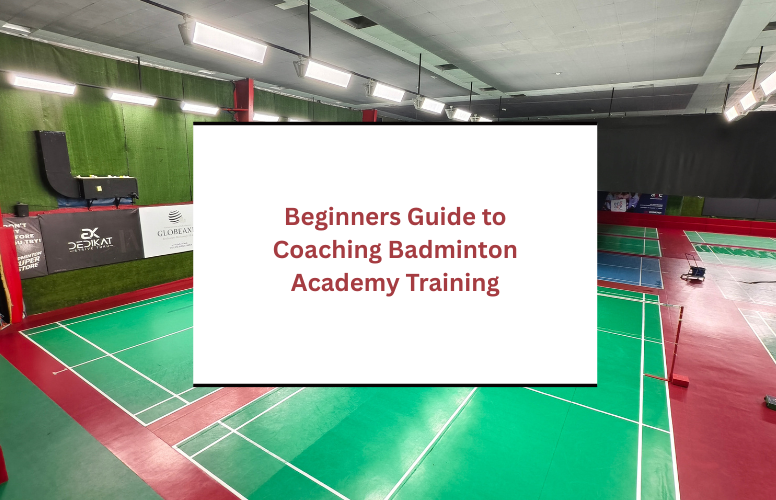
Badminton is known to be one of the fastest sports of the world.s Although it may appear simple, when players step on the court, it is rather skillful and complex; needing speed, focus, fitness, and a game strategy. Usually, beginners who want to start playing badminton end up playing with their friends or family, and because a player cannot improve without guidance, joining a Badminton Coaching Academy becomes beneficial.
Academic badminton coaching is a proper, structured, and progressive way to begginers and people who want to learn the game. It is a great way to relieve a player from developing improper techniques and bad habits as they provide progressive coaching that helps players improve their movements. That also helps with racket control, card drawing, and stamina.
It doesn't matter what a person's aim with badminton is, be it for fun, recreation, school tournaments, or competitive matches. The start of professional training is beneficial. A well trained beginner will definitely provide a source of improvement.
Why join Badminton Coaching Academy
Most people think that badminton is all about hitting the shuttlecock back and forth. Badminton is an extremely technical sport and it can be quite difficult without the right coaching. Badminton is all about timing, footwork, and quick mental decisions. Most beginners don't know how to grip, they don't know how to move correctly, and they lose the game.
Badminton Coaching Academy will provide professional players who can teach students right techniques straight away. The professional coaches guide players at every stage of their development.
Being part of a badminton academy allows novices to:
Learn the fundamentals of badminton
Enhance footwork and court mobility
Improve overall physical condition and stamina
Analyze game strategies
Expand coordination and reflexes
Enable self-assurance in matches
Recognize and train away from fundamental errors
Attain advancement more quickly
Coaches create organized coaching plans to suit each trainee's skill set and help them progress in a structured, goal-oriented manner, avoiding the challenges of trial-and-error.
Grasping the Fundamentals of Badminton
During the first stage of badminton training, instructors prioritize novice badminton players acquiring a strong grasp of the foundations prior to the incorporation of advanced techniques. It is vital to understand the fundamentals as they provide the groundwork for future advancement.
Proper Racket Grip
Coaches usually start beginners by demonstrating the different ways badminton players can hold a racket as a precursor to good shot quality, control, and freedom of the wrist for mobility. Those with improper grip develop a noticeable performance limitation that can even culminate in injury.
Coaches normally demonstrate the:
Forehand grip
Backhand grip
Grip switching techniques
Relaxed hand positioning
Basic Strokes and Shots
In this stage of training, coaches focus on novices gaining shot control and shot consistency before the addition of shot speed and power.
The common beginner shots include:
High serve
Low serve
Forehand and Backhand clear
Drop shot
Net shot
Smash
Defensive lifts
Each shot requires correct stick angle and body coordination as well as shot timing. Training with repetition allows novices to refine their fundamental shot execution and gain confidence.
Court Awareness and Positioning
There are many things to look out for in badminton beyond just smashing the shuttle. Courts have a variety of positions that players should be aware of in order to maintain balance and move efficiently in every rally.
Players learn:
Ready position
Center recovery
Single position
Double position
Opponent prediction
Taking these positions conserves energy and allows players to react quickly during intense rallies.
Importance of Footwork in Badminton
Although many players have mastered their techniques and strikes, they spend way too much time working on their footwork and movement. Badminton Coaching Academies place a huge emphasis on footwork and movement right from the start.
Good movement and footwork helps players to:
Speed up their response time
Stay balanced
Recover more quickly
Cut down on fatigue
Reduce the risk of injury
Movement Drills for Beginners
There are many different drills coaches run their students through to help them master movement and agility. They help students gain a handle on their coordination and timing on the court.
Movement drills may include:
Side to side drills
Shadow badminton
Split-step practices
Ladder drills
Cone exercises
Practice leads to improved muscle memory so that players can move naturally during matches.
Recovery Movement
Most beginners do not practice recovery movement. They fail to return the position in the middle of the court after every shot. Coaching academies teach their students to recover quickly after every movement.
Good recovery movement allows players to be prepared and in position for the next shot.
Beginner Badminton Players' Fitness and Conditioning
Badminton, like many other sports, is physically demanding. Players are constantly on the move, jumping and lunging, while making accurate and rapid decisions. Many people new to the game see themselves exhausted after just a few rallies. Unlike sports that focus mainly on running, badminton requires a good deal of endurance and ability to make quick movements.
The Badminton Coaching Academy believes that the fitness of a player is just as important as the technical aspect. Therefore, fitness training is also a part of the badminton academy.
Warm Up and Stretching
Before any training activity, players need to do proper warm up exercises. Lack of these exercises can lead to injuries, as the muscles and joints are not prepared for activities.
Normal warm up activities include jogs, dynamic stretches, skipping, and mobility exercises that involve joint rotations. Warm ups get blood flowing to the muscles and prepare the physique for the training.
Agility and Speed Training
The sport of badminton requires changes in directions, and coaches include agility exercises to help players move efficiently. Among the agility training are shuttle runs, reaction drills, ladder exercises, jumping, and sprints.
Improved agility helps players react faster during rallies.
Building Endurance
Conditioning drills help beginners improve cardiovascular fitness to match the long rallies and extended matches. Among the endurance training are running drills, interval training, multi-shuttle exercises, and circuit workouts.
Improved endurance helps players match the game's focus and energy.
Strength and Core Stability
Badminton involves powerful movements from the legs, shoulders, and core muscles. Beginners benefit greatly from strength training that improves stability and balance.
Basic strength exercises may include:
-
Squats
-
Lunges
-
Planks
-
Push-ups
-
Core rotations
Stronger muscles support better movement and shot power.
Developing Hand-Eye Coordination and Reflexes
Badminton is one of the fastest racket sports in the world. Players must react quickly while maintaining precision. Beginners often struggle with timing because the shuttle moves unpredictably.
Professional coaching helps improve:
-
Hand-eye coordination
-
Reflex speed
-
Timing
-
Shot anticipation
Coaches use repetitive drills and reaction exercises to sharpen reflexes gradually.
Multi-Shuttle Training
One popular training method used in badminton academies is multi-shuttle practice. Coaches feed multiple shuttles rapidly to improve speed, consistency, and reactions.
Benefits of multi-shuttle drills include:
-
Faster reactions
-
Better stamina
-
Improved shot consistency
-
Increased court coverage
These drills help beginners adapt to the fast pace of badminton.
Match Practice and Real Gameplay Experience
Practicing drills is important, but applying skills during real matches is equally essential. A Badminton Coaching Academy provides beginners with opportunities to participate in practice matches and friendly games.
Match practice helps players understand:
-
Game flow
-
Rally control
-
Shot selection
-
Pressure handling
-
Strategic thinking
Beginners gain confidence by regularly competing against players of similar skill levels.
Learning Match Discipline
Badminton is not just physical; it is also mental. Players must stay calm, focused, and patient during matches.
Coaches teach beginners:
-
Staying composed during rallies
-
Avoiding unnecessary mistakes
-
Maintaining concentration
-
Handling pressure situations
-
Respecting opponents and officials
Mental discipline plays a major role in overall performance.
Understanding Singles and Doubles Play
Badminton can be played in singles or doubles formats, and both require different strategies and movement patterns.
Singles Training
Singles badminton focuses heavily on stamina, movement, and shot placement. Players must cover the entire court alone.
Singles coaching emphasizes:
-
Endurance
-
Precise movement
-
Court control
-
Consistent rally building
Doubles Training

 September 9, 2026
 July 28, 2026